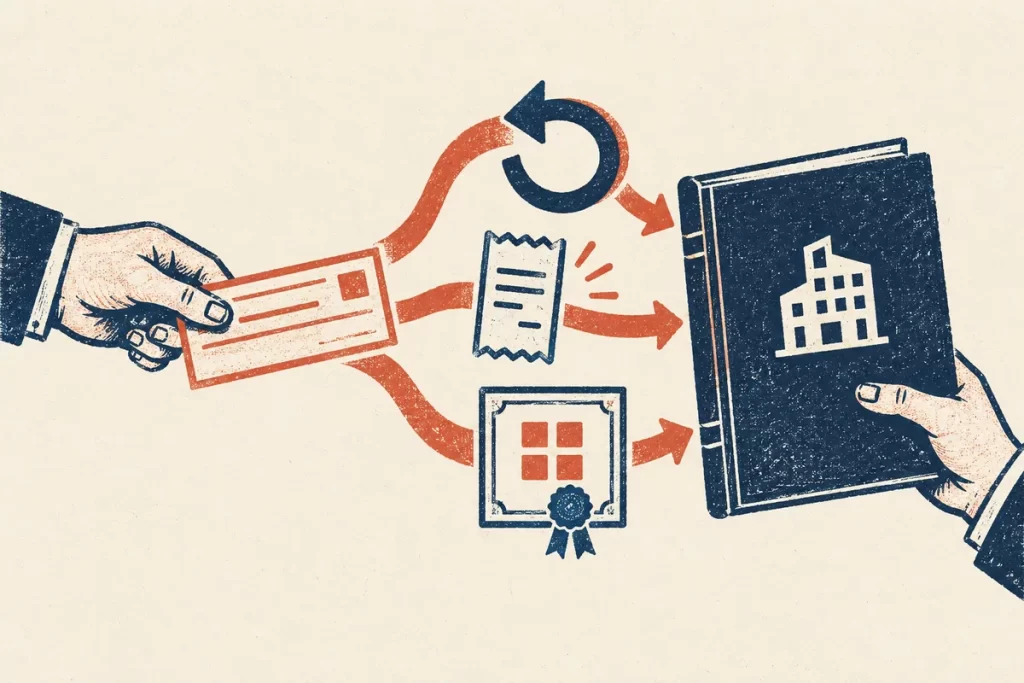
The key point: A shareholder’s transfer into the company bank account is not automatically trading income. If repayment is intended, it is generally recorded as a shareholder loan / amount due to a shareholder. Personal funds used to pay company expenses constitute expenses advanced by a shareholder. Only when shares have formally been allotted and company records completed should the amount be recorded as share capital.
All three may involve money flowing from a shareholder to the company, but their accounting, tax and withdrawal treatment differs. Incorrect entries can obscure revenue and liabilities and cause difficulties during audits, tax filing, bank due diligence or a shareholder’s exit.
How Do Loans, Expense Advances and Capital Contributions Differ?
| Situation | Economic substance | Typical accounting treatment | Subsequent company payment |
|---|---|---|---|
| A shareholder lends money to the company | The company owes a debt to the shareholder | Liability: Amount due to shareholder / Shareholder loan | Repayment of principal is generally not an expense |
| A shareholder pays company expenses | The shareholder pays eligible costs on the company’s behalf | Debit the relevant expense or asset; credit the amount due to the shareholder | Reimbursement reduces the amount due to the shareholder |
| A shareholder contributes capital for shares | The shareholder provides equity capital | Equity: Share capital | Cannot be repaid at will like an ordinary loan |
| Money provided by a shareholder is not repayable | May be a capital contribution, debt waiver or another arrangement | Assess the documents and substance | Do not classify it solely from a bank transfer description |
The decisive factor is not the transfer description, but whether the parties’ original intentions, company resolutions, contractual terms and actual conduct are consistent. If an amount initially described as a loan is later treated as a dividend, salary or capital, clear documents and corresponding accounting adjustments are needed.
How Do You Record a Shareholder Loan?
Suppose a shareholder transfers HK$100,000 into the company bank account, repayment is required and no new shares are allotted:
| Journal entry | Debit | Credit |
|---|---|---|
| Receipt of shareholder loan | Bank HK$100,000 | Shareholder loan / Amount due to shareholder HK$100,000 |
The HK$100,000 increases cash and liabilities. It should not be recorded as turnover, other income or share capital. Receipt of loan principal does not directly change profit or loss.
The account may be named “Loan from Shareholder”, “Amount Due to Shareholder” or “Director’s Current Account”. Maintain separate accounts for each shareholder, such as amounts due to Shareholder A and Shareholder B, rather than combining everyone’s funds into one balance.
Current or Non-Current Liability?
Classification depends on the terms in force at the reporting date. A loan repayable on demand, or one for which the company cannot defer repayment for at least 12 months, is usually current. An oral assurance that repayment will not be demanded may not support non-current classification. Clear, enforceable terms should be in place before year-end for a long-term classification.
How Do You Record Expenses Paid by a Shareholder?
Start-up shareholders commonly use personal cards for registration fees, software, rent, audit fees or computers. The company has not borrowed cash directly; the shareholder has paid on its behalf. Record the transaction according to the underlying expense or asset.
For example, a shareholder pays HK$5,000 in company accounting fees using a personal card:
| Journal entry | Debit | Credit |
|---|---|---|
| Company expense paid by shareholder | Accounting fees HK$5,000 | Amount due to shareholder HK$5,000 |
Computers, fit-out costs or deposits may need to be recorded as fixed assets, rental deposits or other assets rather than immediate expenses. Profits Tax deductibility depends on the nature, use and applicable rules; payment by a shareholder does not make an item automatically deductible.
What Records Should Be Kept for Expense Advances?
- Supplier invoices or receipts, preferably issued to the company;
- The shareholder’s card statements, transfer records or electronic payment evidence;
- An expense claim listing the date, supplier, purpose, amount and category;
- Approval records, especially where the shareholder is also a director or there are multiple shareholders;
- Company repayment records identifying which expense claims are being settled.
A card screenshot without an invoice may not establish the expense’s nature. An invoice without payment evidence may not show which shareholder paid. Both sets of records should reconcile.
Capital Is Not a Loan: When Should You Credit Share Capital?
If payment is for newly subscribed shares and the company has completed the required approvals, allotment and share records, the entry is:
| Journal entry | Debit | Credit |
|---|---|---|
| Receipt of formal share subscription funds | Bank | share capital |
After allotting shares, a Hong Kong company generally must deliver a Return of Allotment, Form NSC1, to the Companies Registry within one month. Board resolutions, subscription documents, the register of members, share certificates and accounts should agree.
A shareholder’s transfer alone does not complete a capital contribution. If share numbers, ownership percentages or procedures remain undecided, it is generally more prudent to record an amount due to the shareholder according to the documents, then have the accountant and secretary review any debt-to-equity conversion or allotment.
Do not treat a return of share capital as loan repayment. Loan principal may be repaid according to the contract and cash flow. Share capital is subject to the Companies Ordinance’s capital maintenance and reduction procedures, potentially involving a solvency statement, special resolution, notices and prescribed filings. An online transfer alone does not complete a capital reduction.
How Do You Record Repayment to a Shareholder?
When the company repays HK$30,000 of principal:
| Journal entry | Debit | Credit |
|---|---|---|
| Repayment of loan principal | Shareholder loan / Amount due to shareholder HK$30,000 | Bank HK$30,000 |
The HK$30,000 simply reduces the liability from HK$100,000 to HK$70,000. It is not salary, a director’s fee, a dividend or a deductible expense. Use a description such as “Repayment of shareholder loan” and identify the loan date or current account period in the payment voucher.
Prepare a shareholder account reconciliation before repayment:
| Item | Example |
|---|---|
| Opening amount owed to shareholder | HK$70,000 |
| New loans during the period | HK$100,000 |
| Expenses advanced during the period | HK$15,000 |
| Repayments made during the period | (HK$30,000) |
| Closing amount owed to shareholder | HK$155,000 |
Shareholders and directors can confirm year-end balances so accounting and audit staff can match the ledger, bank transactions, agreements and payment evidence.
Should a Shareholder Loan Bear Interest?
A shareholder loan may be interest-free or interest-bearing under a written agreement. An interest-free loan remains a liability, not income or capital. For interest-bearing loans, document the principal, rate, calculation period, maturity, repayment order, early repayment and default terms.
Suppose interest payable to the shareholder for the period is HK$4,000:
| Journal entry | Debit | Credit |
|---|---|---|
| Recognise interest payable | Interest expense HK$4,000 | Interest payable / Amount due to shareholder HK$4,000 |
Recognising interest in the accounts does not guarantee a tax deduction. In addition to the general profit-production test, Hong Kong interest deductions must satisfy specified conditions under section 16(2) of the Inland Revenue Ordinance and anti-avoidance rules. Tax reporting may require the lender’s name and address, relationship, loan purpose, security and the deduction condition relied upon. Related-party, cross-border, low-interest and interest-free arrangements warrant tax analysis before signing.
7 Documents to Support an Auditable Shareholder Account
- Loan agreement: Specify the parties, amount or facility, purpose, interest, term and repayment method.
- Board resolution: Approve acceptance of the loan and authorise signing, drawdowns and repayments.
- Bank evidence: Keep receipt, payment and repayment records and avoid untraceable cash.
- Shareholder account ledger: Record dates, descriptions, debits, credits and balances separately for each shareholder.
- Expense claims: Match each invoice to payment evidence, business purpose and approval.
- Interest calculation: Show principal movements, days, rates and accrued and paid amounts.
- Year-end confirmation: Have the shareholder confirm amounts payable or receivable at year-end.
The IRD requires businesses in Hong Kong to retain adequate income, expense, asset and liability records. Records relating to transactions generally must be kept for at least 7 years after completion. Loan agreements, expense claims and bank evidence belong in the company’s recordkeeping system, not just on a shareholder’s personal phone.
5 Common Accounting Errors
1. Recording Every Shareholder Deposit as Sales
This overstates turnover and profit and may distort Profits Tax. First establish the payment’s nature and supporting documents.
2. Recording Every Advance as Miscellaneous Expenses
Classify costs properly, such as rent, software, professional fees or fixed assets; otherwise, management accounts and tax calculations may be inaccurate.
3. Relabelling Loans as Capital Without Corporate Documents
A debt-to-equity conversion requires allotment procedures and company records, not merely moving a ledger balance from liabilities to capital.
4. Treating Repayments as Company Expenses
Principal repayment reduces liabilities. Eligible interest and genuine business expenses require separate consideration.
5. Ignoring a Shareholder Account That Becomes a Debit Balance
If excess withdrawals turn an amount owed to a shareholder into an amount owed by a shareholder or director, the position has reversed. This may raise issues involving director loans, disclosure of interests, remuneration or distributions. Separate the transactions and obtain professional review rather than retain an ambiguous account.
A Simple Monthly Shareholder Loan Workflow
- Download company bank statements and identify all shareholder receipts and payments.
- Collect personal payment evidence and company invoices and complete expense claims.
- Classify each transaction as a loan, expense advance, repayment, remuneration, dividend or capital contribution.
- Update each shareholder’s account rather than relying on total bank transfers.
- Check agreements, board resolutions and interest calculations.
- Confirm balances before year-end and resolve differences or negative balances promptly.
Shareholder Loan FAQs
Does Every Shareholder Loan Need a Formal Contract?
Small short-term advances may not require a lengthy agreement each time, but there should at least be approvals, payment evidence, current accounts and clear repayment arrangements. Written agreements are particularly important for large, cross-border, interest-bearing, multi-shareholder or long-outstanding loans.
Can a Shareholder Loan Be Interest-Free?
An interest-free arrangement can be considered, but document it clearly and have the accountant assess measurement, classification and related-party disclosures under the applicable reporting standards. Cross-border or special ownership structures also require tax analysis.
Can the Company Repay a Shareholder Whenever Cash Is Available?
A genuine, recorded and documented loan may be repaid according to its agreement and cash flow. First ensure repayment will not prevent the company from meeting debts as they fall due, and retain approval and payment evidence.
Does a Shareholder Loan Count as Company Income?
Genuinely repayable principal is generally a liability rather than trading income. A later waiver, change in substance or inconsistency between documents and conduct requires reassessment of accounting and tax treatment.
Can a Loan Later Become Share Capital?
A debt-to-equity conversion can be planned, but allotment terms, director or shareholder approvals, company records and required filings must be completed. Have the secretary and accountant review it first.
Conclusion: Classify Before Recording to Keep Repayments Clear
Distinguish repayable loans, expenses advanced on the company’s behalf and capital subscribed for shares. Loans and advances generally create shareholder liabilities; formal contributions create share capital. Principal repayments reduce liabilities rather than company expenses.
If shareholder accounts have not been reconciled for years, bank transactions do not match invoices, or the company is preparing for an audit, tax filing, investment or shareholder exit, explore M&N’s Accounting and Bookkeeping Services and Tax Filing Services. We can help reorganise current accounts, document checklists and year-end balances for clearer records.
Information is current to 7 September 2026 as stated in the article and is for general reference. Accounting, company law and tax treatment depend on loan terms, corporate documents, applicable reporting standards and individual facts.
Official Sources
- IRD: Keeping Business Records
- IRD: Completing Profits Tax Returns — Interest Expense Information
- IRD: DIPN 13A — Deduction of Interest Expense
- Companies Registry: Major Post-Incorporation Filing Obligations (NSC1)
- Companies Registry: Matters Relating to Share Capital
- Hong Kong Institute of Certified Public Accountants: Guidance on Current and Non-Current Loan Classification